Amazon • UX Design
Automation That Empowers Sellers & Delights Buyers
My Role
Lead UX Designer
Status + Timeline
Shipped 2025
Platform
Amazon.com
Sellercentral.amazon.com
Overview
Sellers on Amazon regularly receive high volumes of buyer messages such as shipping inquiries, return requests, invoice questions that consume time and drive operational costs.
During peak periods, unavailability, or high-volume seasons, these messages go unanswered for hours, damaging buyer trust and triggering disputes.
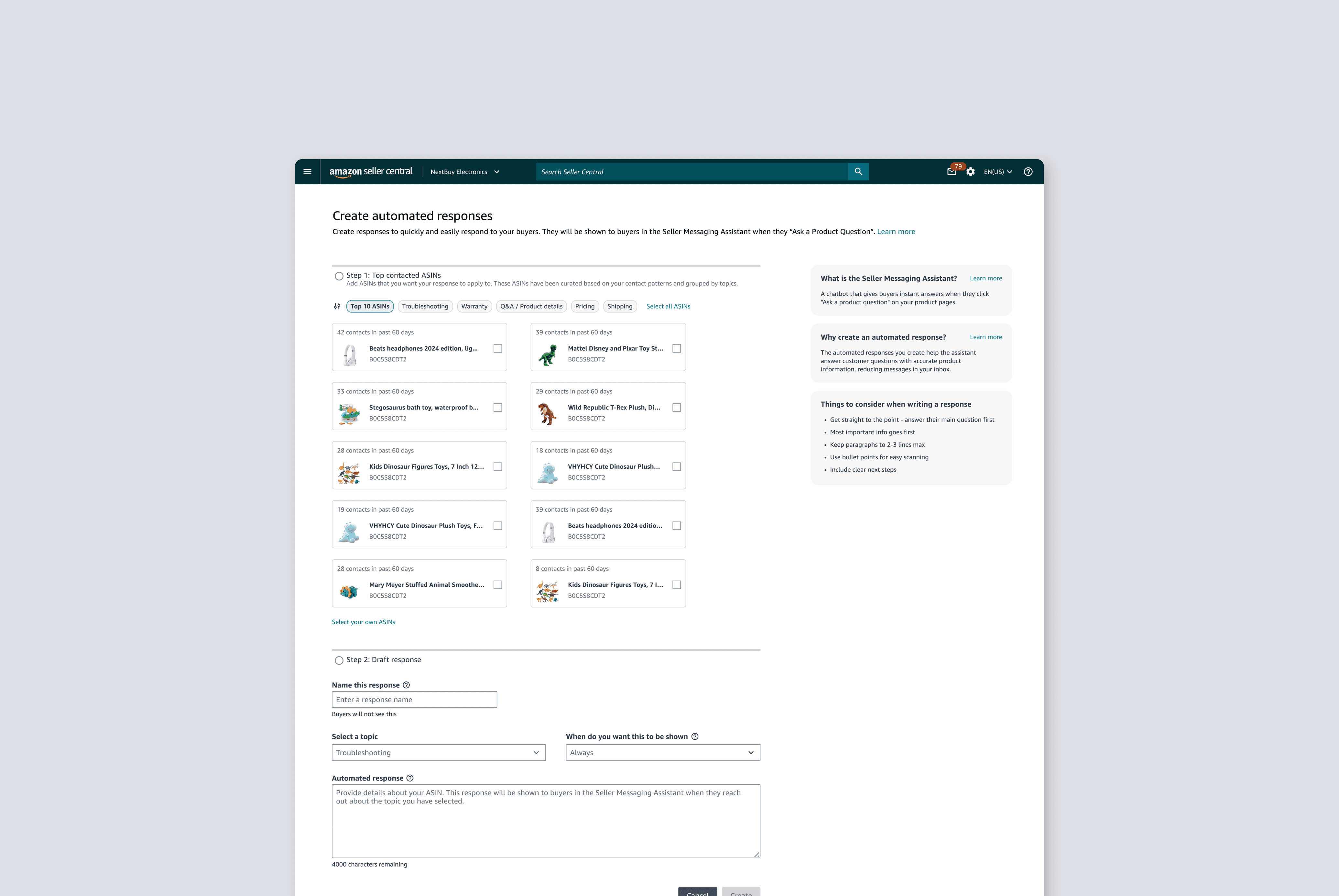
I designed the end-to-end experience across Amazon.com and Amazon Seller Central in order for Sellers to configure automated responses to their buyers on their top use
Business impact
1,300+
Auto responses created across ASIN-level scenarios
15.2%
Decrease in messages requiring manual Seller responses
782
Sellers adopted the feature within the first week
How might we empower sellers to manage buyer expectations during unavailability while maintaining trust and reducing operational costs?
Research
8 moderated interviews, 6 unmoderated usability tests, and a feature audit
In order to better understand Seller needs, I met with them in various settings in order to learn about their experiences and share prototypes of the new experience we were was working on.
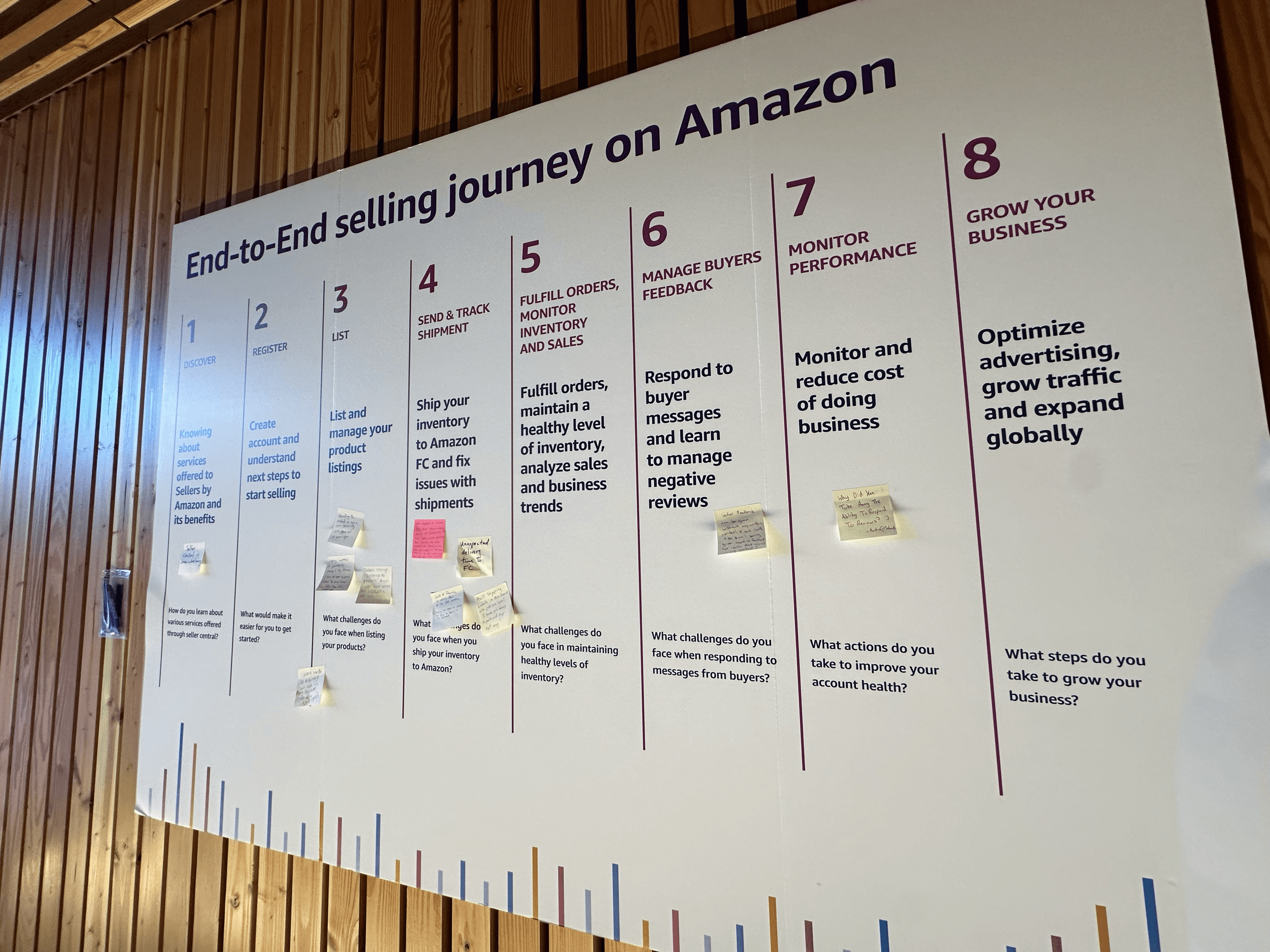
This included hosting a session at our annual Seller conference, where we learned from Sellers in person.
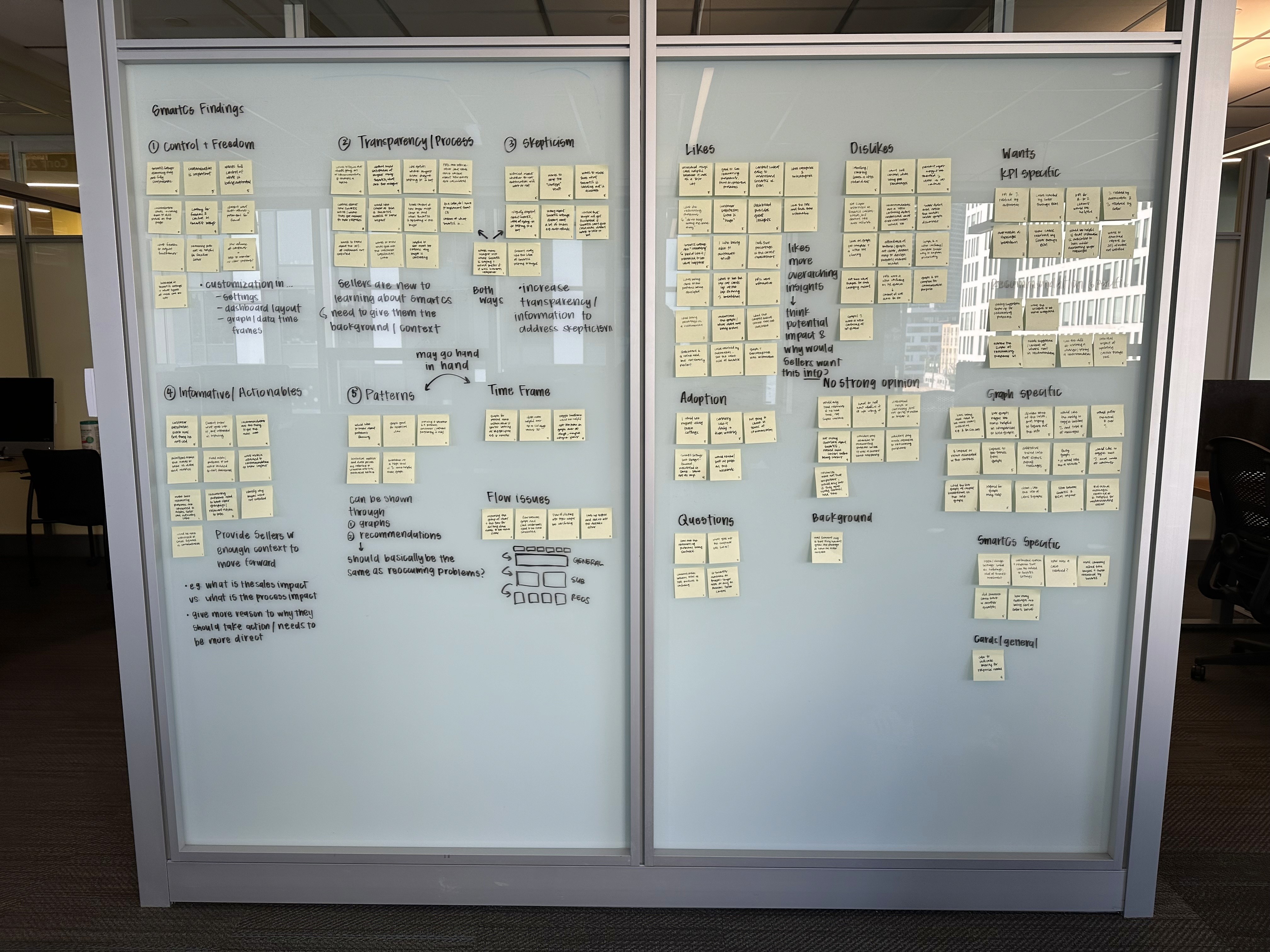
I worked with the product team to conduct an audit of our existing data and review the new research. From that, I uncovered 6 primary use cases representing the highest-volume scenarios for automated responses
Avoid returns
Redirect to customer service
Sharing invoices
Shipping inquiries
Vacation hours
Setting SLA expectations
Sellers want to be able to proactively address their buyers' messages through automating repetitive questions and uncovering root causes through insights.
Our key research insights include:
Desire for customizability: Sellers want to automate common inquiries and customize rules/filters to provide tailored responses aligned with their business needs.
ASIN level insights: Sellers want to see more granular data, such as top issues by product, topic, and sentiment analysis in order to quickly identify common pain points and information needs.
Contextual tooling: Sellers want control and visibility over the refund and returns process. They want to understand the context of a refund request before making a decision.
Feedback mechanism: To promote actioning, Sellers want to be able to see the potential impact of their responses as well as review the success once created.
“I think the most important is the potential reduction in manual messages. So we can create an automated resolution and see that we can reduce the amount of messages that we are responding to manually.”
Design solution
From the Seller's drafting experience to the Buyer's view
The central design challenge was making automation approachable. Most Sellers had never created an auto-response of any kind before this. The design solution needed to be powerful enough to handle real edge cases, but simple enough to spin up quickly.
The design solution was broken down into three key features: context-specific, data-driven, and flexible
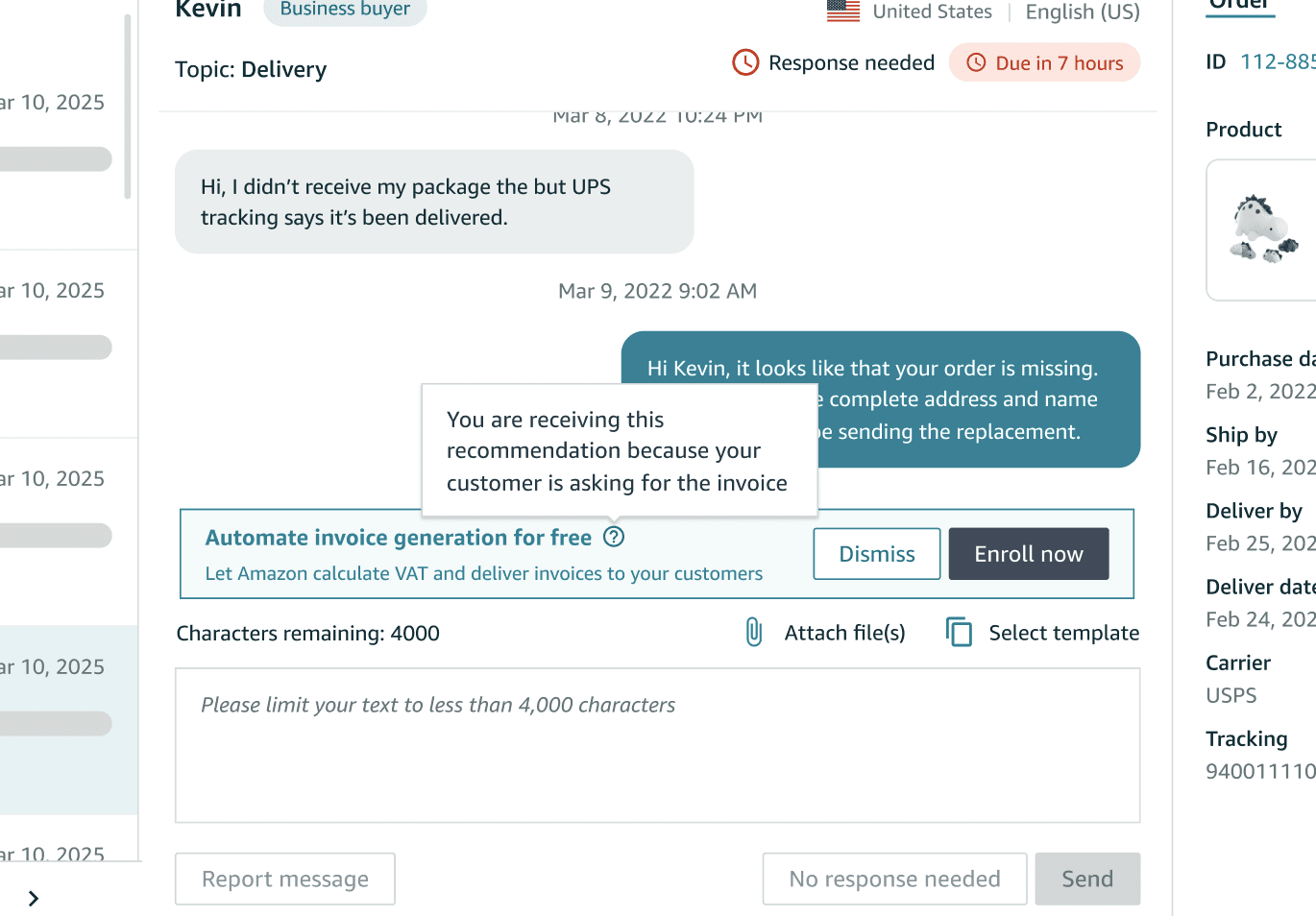
Contextual cues
Automation features go undiscovered on a siloed page. We surfaced them inline within the seller's workflow, where context is most relevant.
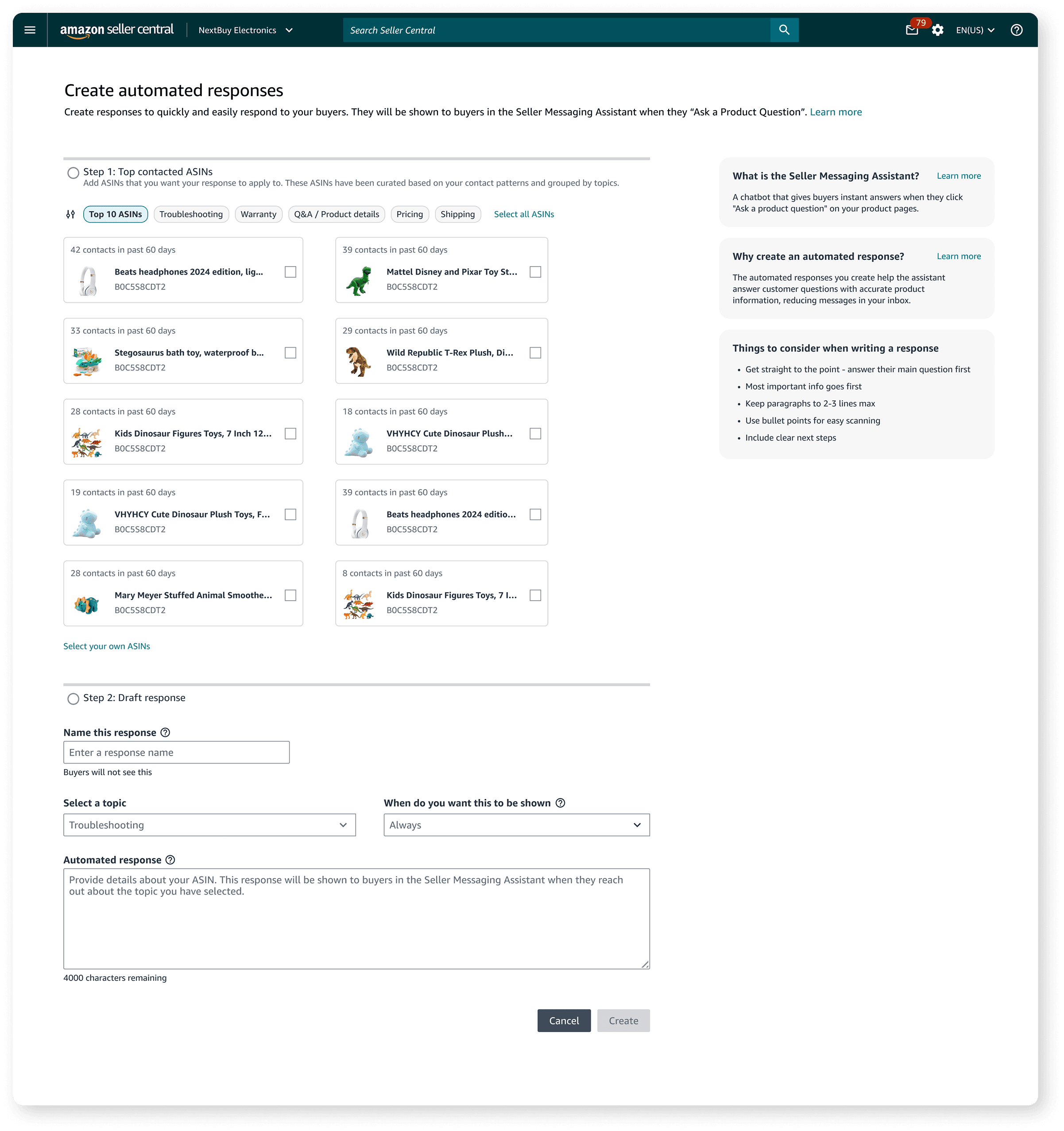
Data driven workflow
Specific contact pattern data to remove decision burden and guide Sellers toward the highest-impact automation configurations first.
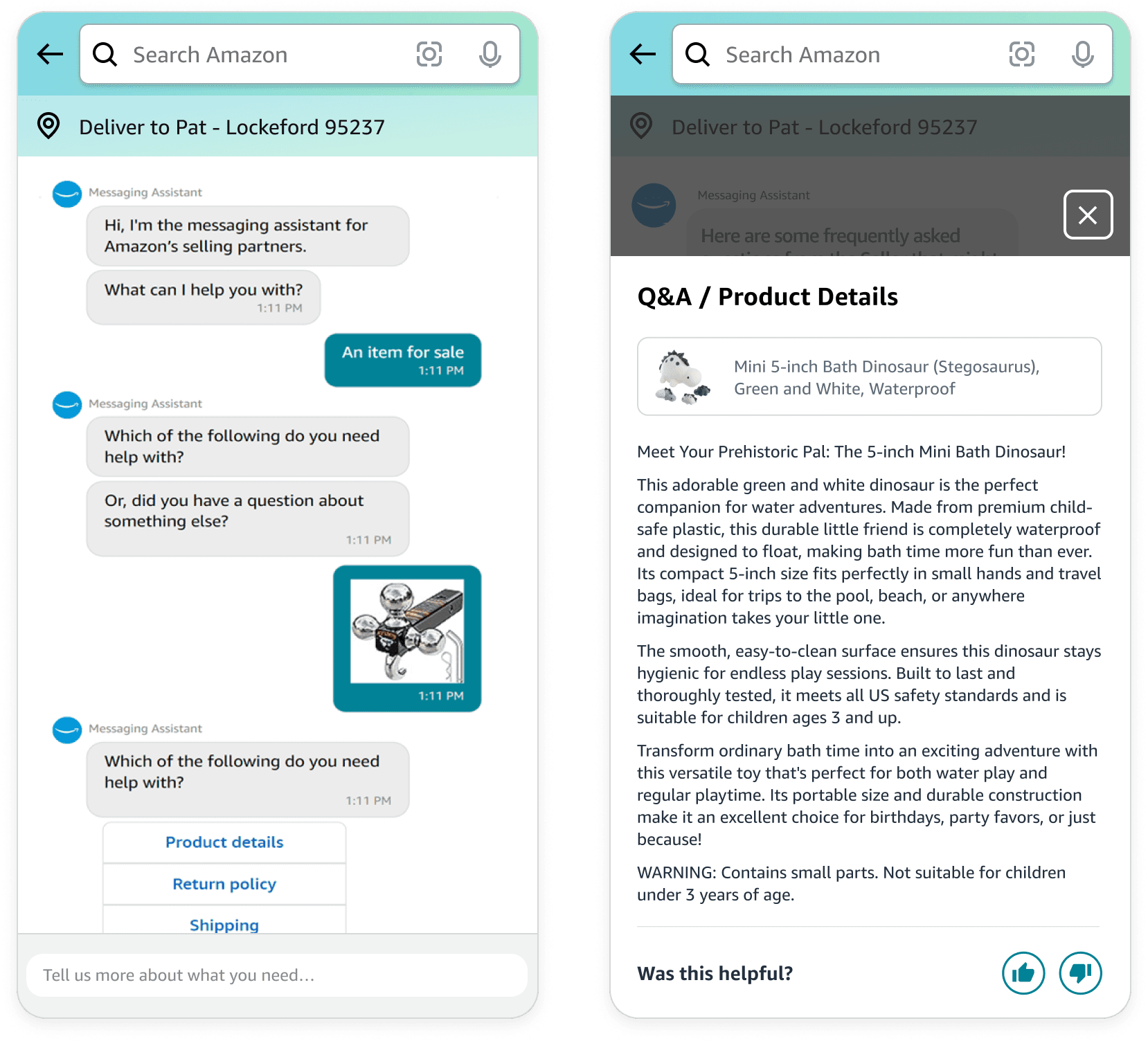
Control & optimization
Once configured, Sellers need confidence that it’s working and the ability to refine it over time through instant pause, metrics, and insights.